🛏️ Slight Head Elevation While Sleeping
While resting or sleeping, keep your head slightly elevated (20-30 degrees) to allow fluid to drain away from the eyelid area and reduce swelling. However, if you cannot sleep well in this position, it is better to sleep flat as usual. Forcing yourself to sleep with your head elevated while not getting enough rest can do more harm than good, as it lowers your immune system and may lead to excessive fatigue the following morning.
❄️ Cold Compress on Eyelids for 3 Days
Close your eyes and apply a cold compress directly onto the eyelids as frequently as possible for the first 3 days. The cold compress helps reduce the inflammatory response, constricts blood vessels, and minimizes swelling and bruising (which appears as red, purple, or blue marks from blood trapped in the tissue). Once the skin temperature in the surgical area returns to normal, typically after 3 days, you may stop the cold compress.
🚫 Do Not Rub Your Eyes
Strictly avoid rubbing your eyes for the first 2 months, even after the stitches have been removed. Because eyelid incisions are often closed with only a single layer of sutures, the tissue remains weak for the first week. Rubbing the area could cause the wound to dehisce (split open).
Upper Eyelid Surgery Cases
If a new crease was created or adjusted, the eyelids may appear abnormal, asymmetrical, or heavy for 1-3 months. Please do not worry excessively and be patient. No corrective procedures will be performed until the healing process is complete at the 6-month mark.
Upper Eyelid Ptosis (Muscle) Surgery Cases
You may be unable to close your eyes completely in the first few months, which will lead to dry eyes. You should apply artificial tears frequently. If your eyes are very dry, inform your doctor so they can teach you how to properly tape your eyes shut before sleep. Patience is required to see the final result, and no revisions will be considered until 6 months have passed.
Lower Eyelid Surgery (External Incision) Cases
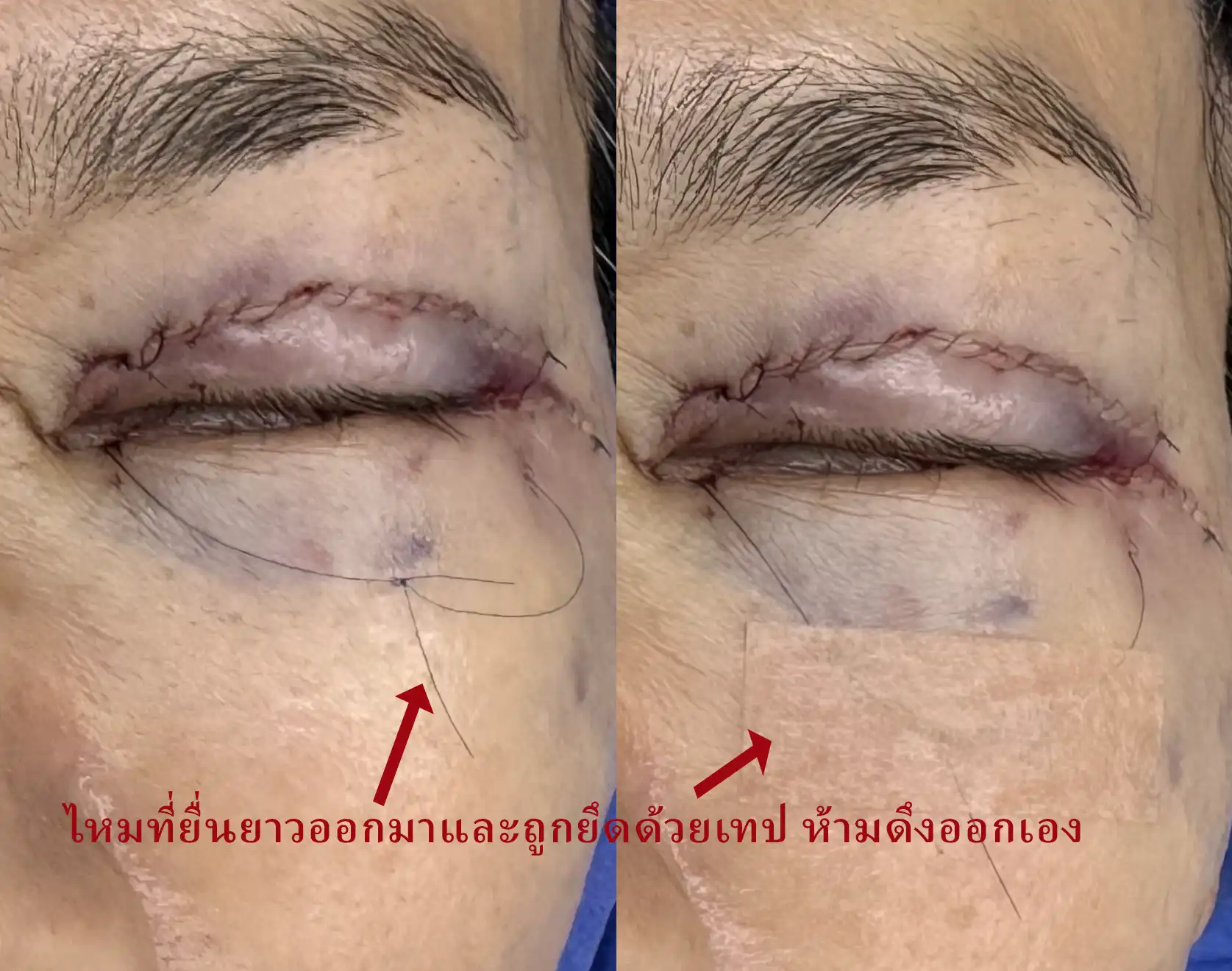
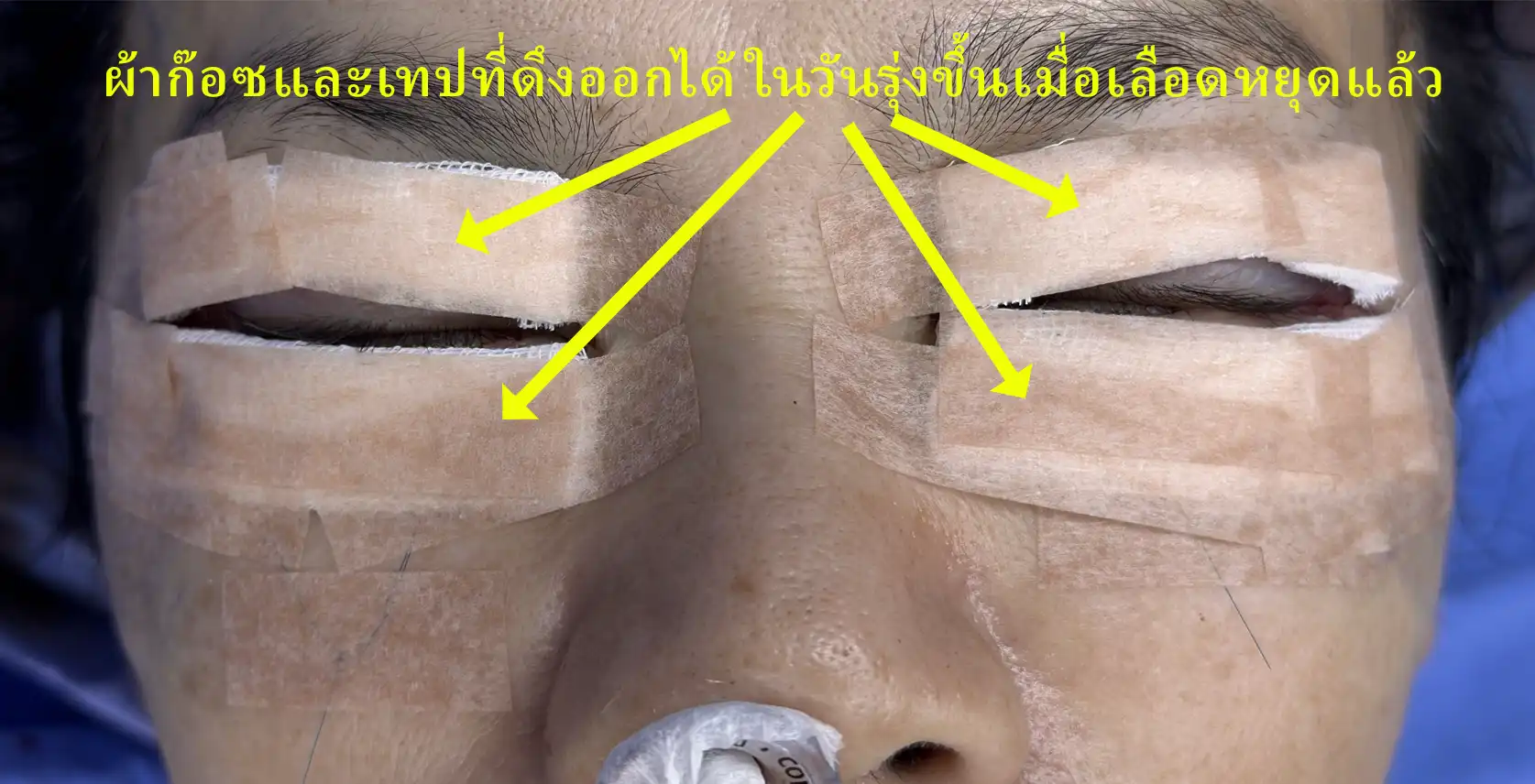
There will be suture ends extending from the wound, secured with tape. Do not pull them out yourself. Between 1-2 months after surgery, internal fibrosis (scar tissue) may contract, causing the lower eyelid to pull slightly away from the eyeball. If the retraction is significant, it can be relieved by using tape to support and lift the lower eyelid until the fibrosis relaxes. The condition will improve on its own.
Lower Eyelid Surgery (Internal Incision) Cases
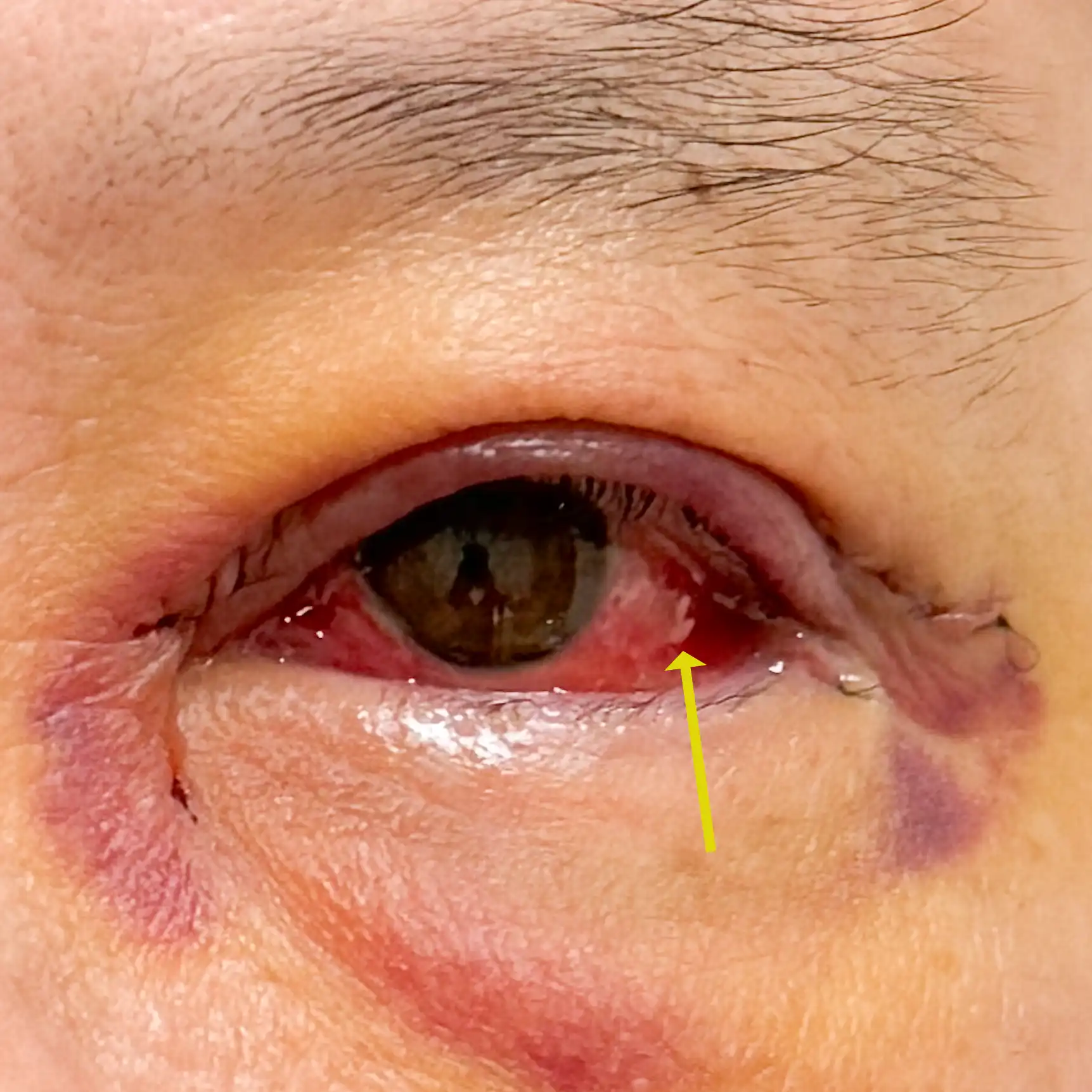
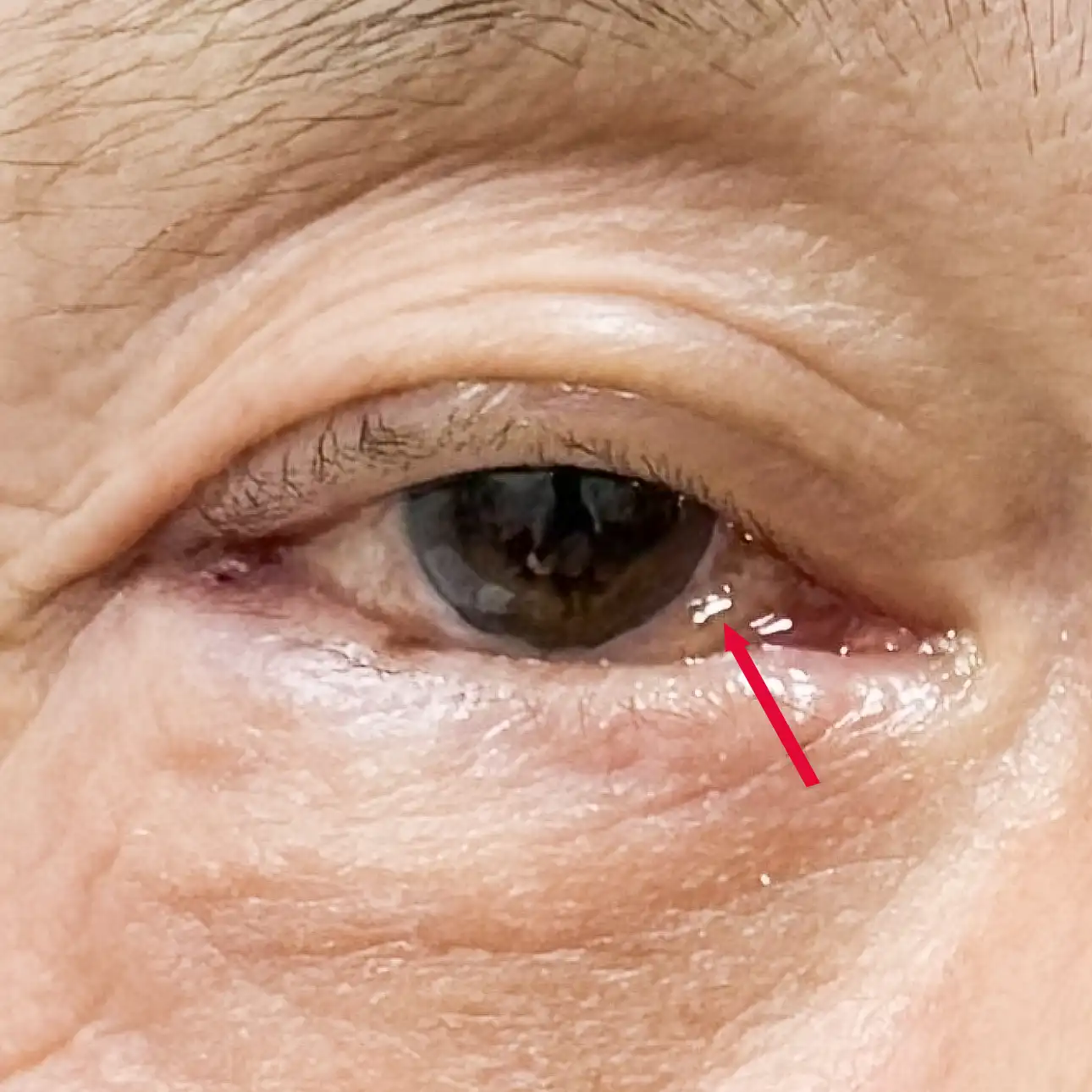
Significant chemosis (swelling of the conjunctiva) may occur during the first week; however, this typically resolves spontaneously. Contact lens wear is strictly prohibited during this period. You may apply sterile saline drops to the eyes. Because saline has a higher concentration (hypertonic) than the fluid trapped in the conjunctiva, it helps draw out the excess fluid, thereby accelerating the reduction of swelling. Please avoid using other eye drops, particularly those containing steroids, unless specifically directed.